
Route 02 · Compliance guide
ELDT theory compliance, by the numbers.
Federal Entry-Level Driver Training theory has no minimum hour requirement. It is proficiency-based: the provider must cover every topic in the applicable 49 CFR Part 380 curriculum appendix, and the driver-trainee must pass a written or electronic theory assessment with an overall score of at least 80%.
After the requirements are met, completion must be reported electronically to the FMCSA Training Provider Registry (TPR) before the state administers the related test.
Appendices A–E · 49 CFR Part 380
The federal snapshot
What gets verified—and when.
Theory is only one part of the route. This table shows the related test trigger and whether behind-the-wheel (BTW) training is part of the credential.
| Credential | ELDT verification occurs before | Theory required? | Behind-the-wheel required? |
|---|---|---|---|
| Class A CDL (new or upgrade) | CDL skills test | Yes | Yes — Range and Public Road |
| Class B CDL | CDL skills test | Yes | Yes — Range and Public Road |
| Passenger (P) endorsement | P skills test | Yes | Yes — Range or Public Road |
| School Bus (S) endorsement | S skills test | Yes | Yes — Range or Public Road |
| Hazardous Materials (H) endorsement | H knowledge test | Yes | No |
This overview follows 49 CFR Part 380 Appendices A–E and the vehicle groups in 49 CFR 383.91(a). State requirements can be stricter.
Choose your route
Start with the credential you are adding.
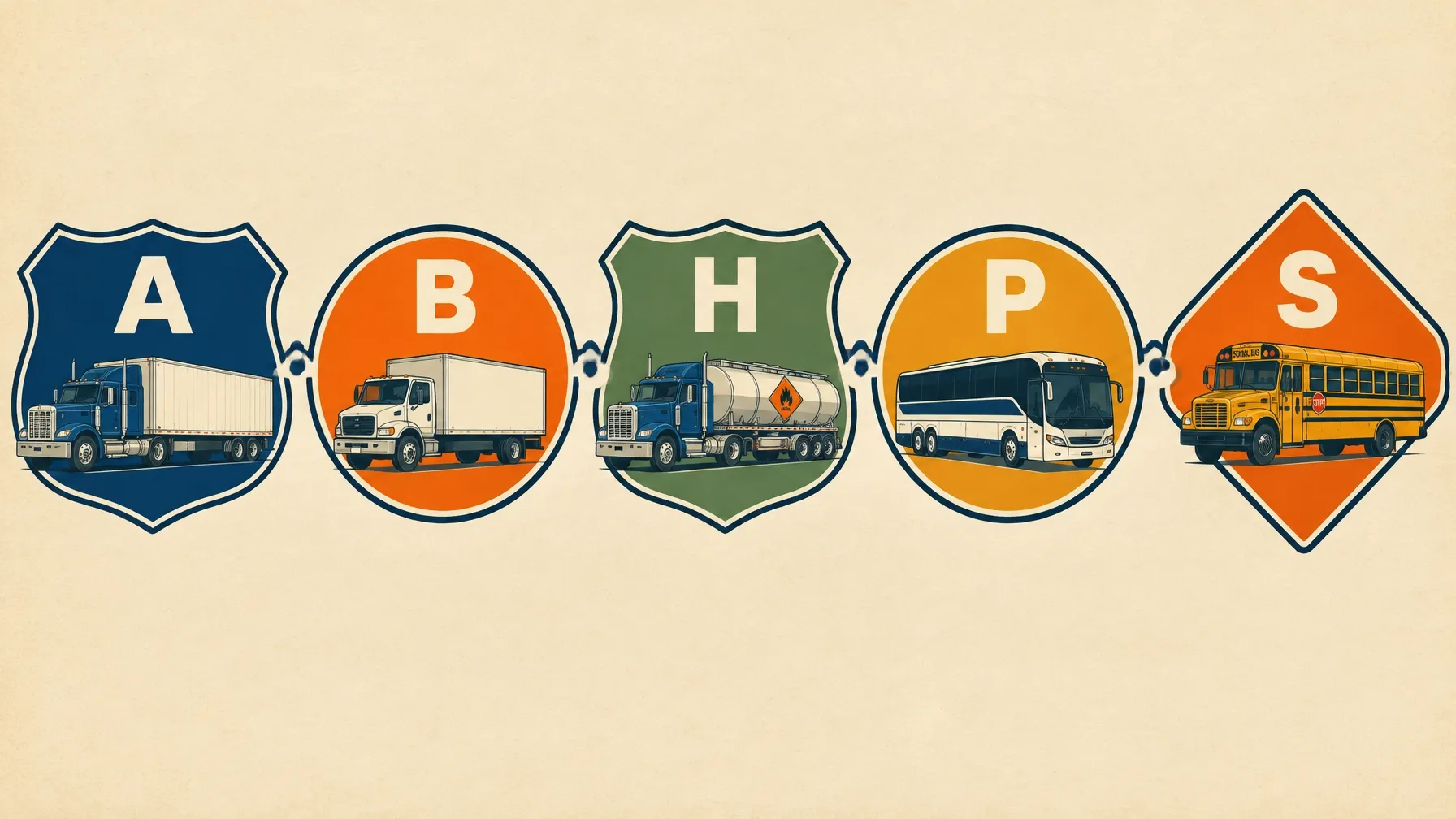
01 / Class A
Combination vehicle theory
Appendix A curriculum for a new Class A CDL or a Class B to Class A upgrade.
Read the units →02 / Class B
Straight vehicle theory
Appendix B for a new Class B CDL, plus the separate upgrade curriculum.
Compare both paths →03 / H endorsement
Hazardous materials theory
Appendix E theory only—no behind-the-wheel requirement.
See Appendix E →04 / P endorsement
Passenger vehicle theory
Appendix C theory, followed by in-person range or public road BTW.
See Appendix C →05 / S endorsement
School bus theory
Appendix D theory, followed by in-person range or public road BTW.
See Appendix D →06 / Texas
State layer
How TDLR, TWC, DPS, CLP timing, and federal ELDT fit together in Texas.
Read the state layer →Who is covered?
The February 7, 2022 line matters.
ELDT applies to anyone seeking a Class A or Class B CDL for the first time, an upgrade (for example, Class B to Class A), or a first-time H, P, or S endorsement, on or after February 7, 2022.
Drivers who held a CDL or H/P/S endorsement before February 7, 2022 are not subject to ELDT for those existing credentials.
CDLCompliance provides online-eligible ELDT theory. Behind-the-wheel training is in person with a partner school.